

Recovering
valuable resources
from seawater brines

MagNa is a research project co-funded by the European Commission that will develop a system to recover valuable raw materials from seawater brines with the goal of reducing Europe’s reliance on imports.
A circular-economy approach to give value to seawater brines
Seawater desalination is an increasingly used method to obtain water for industrial use, but this process generates brines—effluents with a high concentration of salts—which have traditionally been considered waste. The MagNa project will give value to these brines by recovering high-purity magnesium hydroxide and sodium chloride (salt) through a novel technology.
Magnesium and sodium are valuable raw materials with applications in various industries such as chemicals and pharmaceuticals, and they are currently imported in large quantities from countries outside the European Union (EU). Thanks to MagNa, this dependency will be reduced, while at the same time minimising the environmental impact of desalination through a circular-economy approach.
Recent news
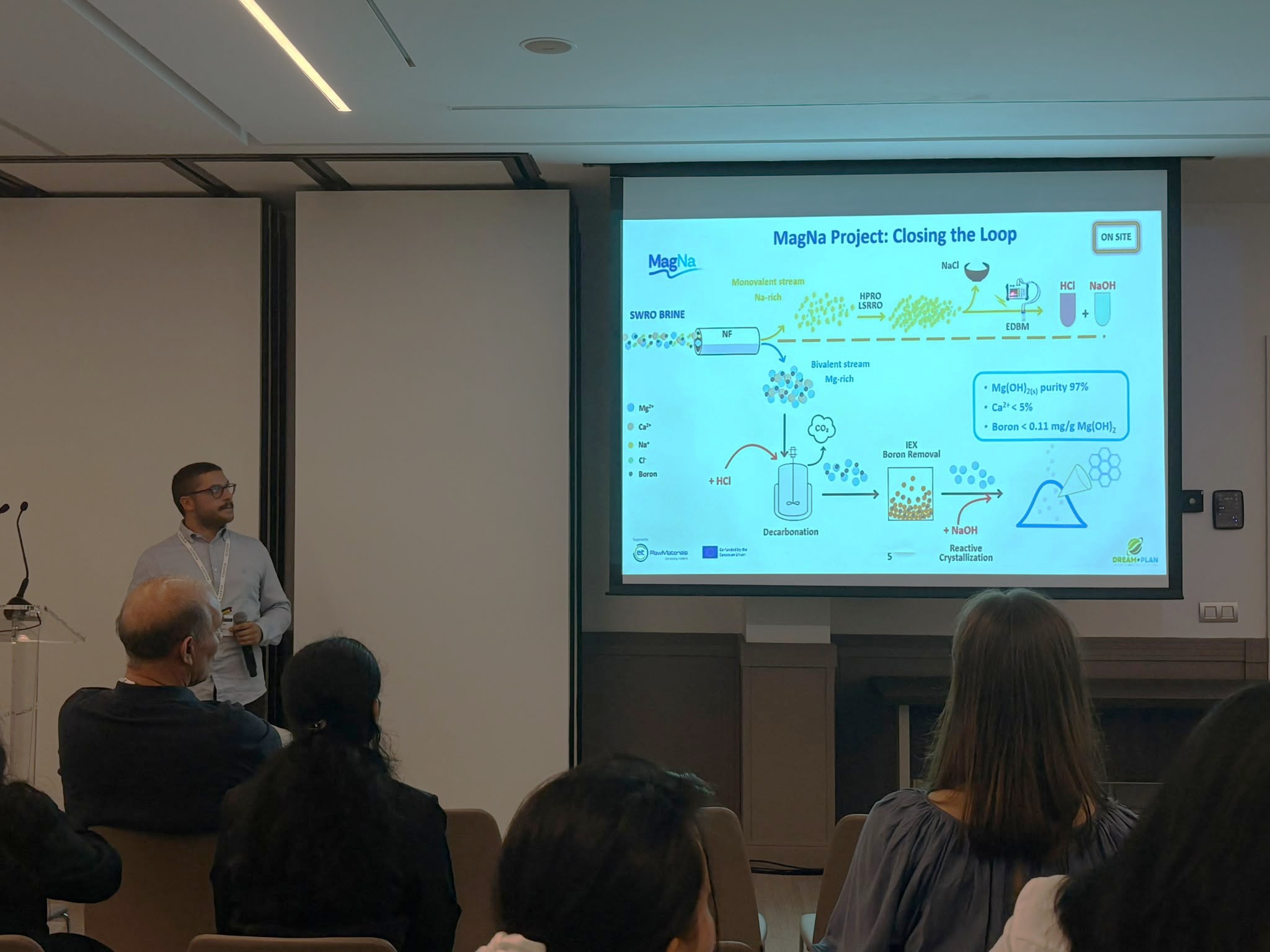
MagNa participates at ISTP 2026
September 15, 2026
The MagNa project, explained in its promotional video
July 30, 2026

MagNa in numbers
2540331 €
BUDGET
4
PARTNERS
30 months
DURATION
43K m3/year
Seawater Intake Capacity

Visit the virtual tour of the MagNa project site
We are working on the virtual tour of the MagNa project site. It will be available soon for online visit.
Consortium



Subscribe to our yearly newsletter to stay up to date!
Get all the news from Fundación Cetaqua, Centro Tecnológico del Agua, Fundación Privada (CETAQUA); from Fundación Centro Gallego de Investigaciones del agua, Fundación Privada; from Centro Andaluz de Investigaciones del Agua, Fundación Privada and other Veolia Group companies, as well as announcements of upcoming events, lectures, activities, among others.